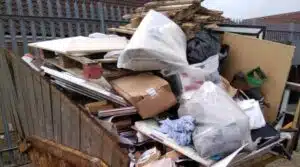
If you’ve recently hired a skip from us at Black Country Skip Hire for a domestic clear-out or a large commercial project, you’ve done your bit: filling the container with your unwanted waste. But once our driver has collected it from your home or site in Bilston or anywhere in the wider West Midlands, have you ever stopped to wonder where it actually goes?
The answer is far more complex and interesting than simply “the dump.” In fact, for a responsible company like ours, the journey a skip load takes once it leaves your premises is a carefully managed, multi-step process designed to minimise landfill use and maximise recycling. Understanding the destination of your waste is central to understanding the full value of a professional skip hire service.
The Skip Emptying Process
The process of emptying a skip is much more involved than a lorry simply tipping the contents away. It is a systematic operation to ensure legal compliance and environmental responsibility. Here is how we handle your waste at Black Country Skip Hire:
Collection
Once you call us to say your skip is full, our specialist vehicles—whether collecting a small domestic skip or a large industrial RoRo container—will retrieve it on the agreed date. Safety and efficiency are paramount at this stage.
Transportation
The filled skip is then taken directly to a licensed Waste Transfer Station or Material Recovery Facility (MRF). This is the designated place where skips get emptied. We never take waste directly to landfill. This central hub allows us to process waste from all our domestic, commercial, and industrial clients across the Black Country region in one efficient location.
Sorting
This is the most crucial stage. At the facility, the waste is tipped out onto a large floor or conveyor belt. Highly trained personnel and machinery then begin the meticulous process of separating the mixed contents into distinct categories for recycling, recovery, and disposal.
Processing
Recyclable materials are then processed further. This might involve crushing concrete and bricks to create recycled aggregates, shredding wood to be repurposed or used in biomass energy, or baling plastics and metals.
Disposal
Only residual waste (that is, materials that genuinely cannot be recycled, reused, or recovered) is then sent to landfill or an energy-from-waste facility, ensuring we maintain a consistently high recycling rate.
How Is Skip Waste Sorted?
The sorting phase is where the commitment of Black Country Skip Hire to sustainability really shines through. By using a professional skip hire service, you are essentially outsourcing this complex environmental duty to experts who know exactly how skip waste is sorted to meet modern UK standards.
Waste is separated into various categories for recycling:
- Aggregates: Clean bricks, concrete, and hardcore are crushed into different grades for reuse in construction and road building, a true example of a circular economy.
- Wood: Timber, pallets, and lumber scraps are sorted. Higher-grade wood can be refurbished, while lower grades are usually chipped for use as biomass fuel or mulch.
- Metals: Ferrous (iron and steel) and non-ferrous metals are separated and sent for smelting to be turned into new products, such as car parts and new construction materials.
- Plastics and Cardboard: These light, bulky materials are baled and sent for further processing and manufacturing into new packaging or products.
- Garden Waste: Green waste, like grass clippings and branches, is often composted to create nutrient-rich soil improvers.
Through this meticulous segregation, a significant proportion of your skip contents (typically 90% or more) avoids landfill entirely.
What Happens to the Rest?
Even after all salvageable and recyclable materials are pulled out, a small fraction of the waste remains. This residual fraction typically consists of contaminated materials, low-grade mixed rubbish, and non-recyclable items. For this residual waste, we must follow strict environmental regulations for disposal.
Modern UK waste management focuses on recovery. While historically this material would have been landfilled, more and more is now directed to Waste-to-Energy (WtE) plants.
These facilities incinerate the non-recyclable waste to generate heat and electricity, turning final rubbish into a useful power source rather than simply burying it. This strategic approach ensures that even waste that cannot be recycled is recovered for maximum value before final disposal.
Skip Emptying Final Thoughts
When you partner with Black Country Skip Hire for your domestic, commercial, or industrial needs, you’re not just paying for a metal box; you’re investing in a transparent and environmentally sound waste management solution.
Contact Black Country Skip Hire today to discuss your skip hire requirements and to get a free, no-obligation quote. Call the team directly, or send an email to have one of our experts call you back.